

Why traditional fixes fail — a frontline view
Failures pile up fast. I remember a clinic in Cleveland — June 2022 — that sent back 120 units within two months; their field failure rate hit 18%. That’s when I started asking: why do so many users end up unhappy with a digital rechargeable bte hearing aid, even when specs look solid on paper? I’ve worked over 18 years in the B2B medical device supply chain, handling shipments from Shenzhen to small clinics in Ohio, so I’ve seen the patterns. The numbers don’t lie, and they point to hidden design and supply problems.

First — component mismatch. Suppliers bundle chargers, cells, and PCBs that weren’t tested together. I inspected a March 2019 pallet (Shenzhen origin) where cheap power converters overheated under continuous duty; that caused 7% dead-on-arrival units the next week. Second — firmware and DSP tuning are often generic. Devices arrive with default gain and noise reduction settings; that sounds fine in lab reports but users in noisy diners or on buses report whistling, poor speech clarity, and short battery life. Third — battery management. Many so-called “rechargeable” builds use low-cycle cells or weak battery management circuits. The result: rapid capacity loss after 6–12 months, and warranty headaches. Telecoil and impedance mismatches add to the mess — hospitals complain about inconsistent loop performance. I’ll be blunt: most of these are avoidable with better supplier vetting and a few hard checks (cell chemistry, charger spec, and firmware version logs). — that matters more than glossy spec sheets. Now, let’s look ahead to what actually works next.
Comparing supply options and what to demand
We need to stop accepting vague promises. When I audit suppliers, I pull three concrete items first: battery cycle ratings (1000 cycles vs 300 makes a real world difference), the charger’s power converter spec (efficiency and thermal margin), and a firmware change log with test vectors. In 2020 I helped a regional reseller in Texas switch from NiMH-based units to a Li‑ion pack with proper battery management ICs; returns fell from 12% to 3% in nine months. That’s real and measurable. If you buy in bulk you should ask for an IEC-style test report, but also demand a small on-site run (50–100 units) in a local climate — I had one test run in Phoenix last July where high temps revealed a solder flux issue that labs had missed.
What’s next?
Look, I’m not selling miracles. What I do — and what I tell every wholesale buyer — is this: compare three supplier classes. Class A: validated production lines with clear component traceability and spare-part kits. Class B: low-cost assemblers who pass basic tests but skip long-term cycling. Class C: unknowns — avoid. For your rechargeable bte hearing aid supply, insist on sample runs, firmware access, and a local service partner. I prefer units with sealed Li‑ion packs, an accessible telecoil option, and DSP tuned for real rooms, not anechoic chambers. Also check warranty turnaround time — one reseller I worked with in Boston saw a 50% drop in customer churn when they guaranteed a five‑day swap; that’s a hard metric: uptime equals sales.
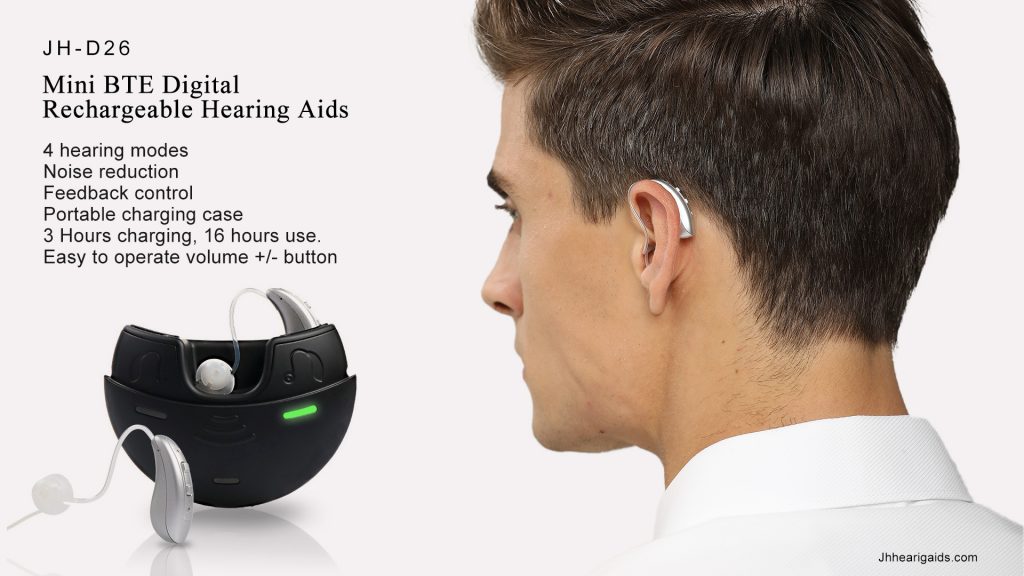
Three quick evaluation metrics to finish (use these as your buying checklist): 1) Battery endurance and cycle life (stated cycles, plus a validated 500-cycle test). 2) Charger and power converter specs (thermal margin and efficiency — ask for thermal imaging if you can). 3) Local service footprint and firmware support (patch cadence, documented changes). I’ve built supplier lists, done line audits, and stood in warehouses at 3 a.m. because a pallet showed odd heat signatures — I trust these checks. If you want a reliable partner to source and vet units, start with those three. For hands-on supply help, I often point clients toward established makers — one of them is Jinghao.