
The cost problem that stalls product velocity
High MCU prices choke margins and slow launches for payment terminals and soundbox devices. Teams stay stuck buying powerful microcontrollers, then layering connectivity and security on top. A cleaner route uses OpenCPU-enabled modules to run application logic on the cellular modem itself — lowering MCU spend and simplifying firmware stacks. Early pilots should evaluate modern 5G Module options that support OpenCPU and integrated security to make this shift practical and repeatable.
Why OpenCPU is the lever
OpenCPU turns the modem into a trustworthy application host. It reduces the need for a separate MCU, shrinks BOM complexity, and shortens firmware cycles. You still handle peripherals — audio codecs, payment PIN pads, POS printers — but core connectivity, TLS stacks, and SIM/eSIM management can live on the modem. That means fewer MCU SKUs to source and lower certification scope for regional cellular approvals.
Blueprint: building a programmable payment soundbox
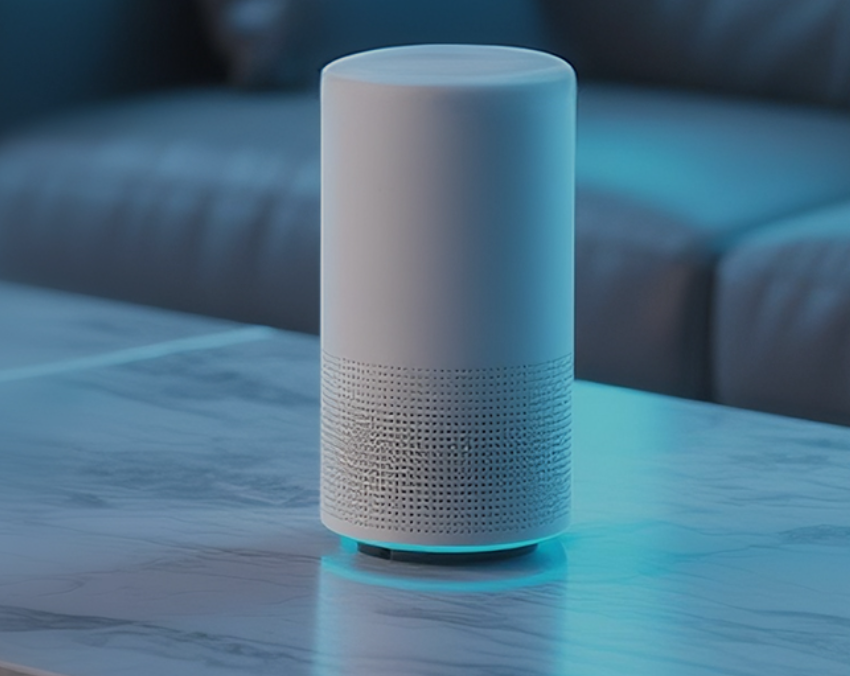
Start with three priorities: a modem that supports OpenCPU and secure boot, a small real-time controller for low-latency audio and HMI, and a tested integration plan for payment security. Select modules that expose UART/SPI and audio interfaces and provide an SDK for application deployment. Edge computing capability on the module helps offload cryptographic routines and network logic. Aim for modularity so you can swap MCUs for more advanced HMI later without redoing radio certification.
Deployment realities and common mistakes
Teams often underestimate OTA complexity and the interaction between modem firmware and application stacks — which leads to tangled updates and downtime. Plan a robust OTA pipeline from day one. Also, don’t treat the OpenCPU environment like a full Linux box; it’s constrained. Balance tasks: keep real-time audio and payment-critical flows on the local controller, while letting the modem handle session management and secure comms — this split preserves latency and reliability.
Alternatives and when to choose them
If you need heavy local processing — advanced audio DSP, offline ML, or multi-threaded UI — retain a beefier MCU or MCU+application processor. For ultra-low-cost, low-power readers, consider NB-IoT modules or a basic MCU with a certified cellular modem acting purely as a modem. But when you want to cut MCU costs and accelerate compliance, OpenCPU modules and an indoor unit strategy can be decisive. For fixed-site use or dense indoor deployments, a complementary 5G IDU Solution can stabilize connectivity and reduce retry overheads.
Real-world anchor: lessons from early 5G rollouts
South Korea’s 5G commercial launch in 2019 showed what predictable, high-bandwidth connectivity enables — richer services running closer to the edge and faster iteration cycles for connected devices. Firms building payment hardware learned to trust integrated modules with certified radio stacks rather than stitching components together. Those projects cut time-to-market when teams reduced MCU variants and leaned on the modem’s built-in features.
Summary and actionable next steps
Move to OpenCPU in stages: prototype with a single module family, harden OTA and security, then ramp procurement. Keep the device split clean: local controller for real-time I/O, modem for networking and cryptography. Test power profiles early; battery life is a silent cost. Iterate firmware fast and measure field update success rates — that metric reveals integration health.
Three golden rules for selecting the right approach
1) Measure integration risk: track OTA success, boot stability, and modem-app crash rates. 2) Prioritize certified security: choose modules with secure boot, hardware crypto, and compliance history. 3) Align procurement with variants: pick module families that cover your regional bands to avoid mid-run swaps.
Deploying OpenCPU-based soundboxes cuts MCU spend, tightens supply chains, and speeds releases — when you follow the rules and test the split between controller and modem. Trust the modules that already prove themselves in commercial settings; they make the difference. Fibocom. —