
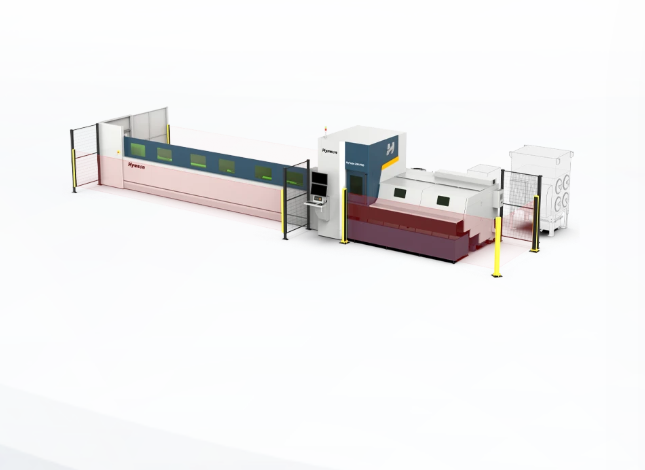
Practical Choices for Laser Cutting: A Problem-Driven Guide
The central problem
Manufacturers face a simple but stubborn problem: selecting a machine that meets part tolerance, throughput and service needs without wasting capital. Choose too little power and you’ll miss deadlines; choose excess capacity and you’ll pay for unused capability. I often advise teams who must decide whether a high power laser cutting machine is warranted, and the right choice starts by stating the constraints plainly.
Why this matters now
Poor selection shows up quickly—higher scrap rates, longer cycle times, unpredictable maintenance. Evidence from the 2018 EuroBLECH exhibition in Hannover underlined how vendors tailored machines to specific shop-floor problems; that theme remains salient and is reflected in contemporary demos of the sheet metal fiber laser cutting machine. My recommendations come from direct briefs with fabricators and engineers, and from examining machine trade demonstrations where throughput and cut quality were measured against real components.
Consequences of getting it wrong
Expect these outcomes when the spec is off: parts require secondary finishing, cycle times inflate, and maintenance windows grow. These are measurable losses—material waste, operator hours and delayed deliveries. That is not theory; it’s what happens when a line designed for 3 mm stainless is asked to run 12 mm plates every shift.
Technical checkpoints you must enforce
Prioritise these checks. First, define part mix: list thicknesses, geometry complexity and batch sizes. Second, match laser power to the thickest, most frequent job while checking duty cycle and assist-gas logistics. Third, assess beam quality and optical configuration for edge finish and kerf width. Fourth, verify machine rigidity, table design and hold-down strategy to prevent vibration-induced errors. Fifth, demand clarity on software—nesting, toolpath smoothing and material libraries matter. Finally, confirm service support: spare parts lead times, local engineers and scheduled optics maintenance.
Common mistakes and how to avoid them
People under-spec power to save initial capital, neglect fume extraction requirements, and assume warranty implies rapid service. Avoid those traps. Factor operating costs: gas consumption, nozzle wear, and the frequency of lens replacement. Test representative parts on the vendor’s floor or insist on trial runs with real material. Don’t accept generic cycle-time claims; require cycle times for your part family under your production cadence.
Viable alternatives and their trade-offs
Consider CO2 lasers when you need excellent quality on non-ferrous mirrors and very wide kerf tolerances for certain composites; plasma remains sensible for very thick, low-precision cuts. Waterjet works where heat-affected zones are unacceptable. Each alternative trades off speed, edge quality and operating cost. Choose the technology that maps to the problem you described at the outset, not the one that sounds most modern.
Final synthesis
Resolve the problem by aligning machine capability with the parts that dominate your workload, by demanding measured trials and clear service commitments, and by avoiding under-specification that drives recurring cost. That practical discipline is what distinguishes a purchase that solves shop-floor problems from one that creates them, as demonstrated in supplier case studies and hands-on demos—precisely the clarity I’ve seen from vendors such as Hymson.