
First impression — what the structure must feel like
You should step out and immediately notice the temperature drop on your shoulders, the soft muffling of city noise and the grain of warm timber under your palm; that’s the promise a solar pergola must keep. This guide focuses on what you, the user, notice first — shade that soothes, panels that disappear into the profile, controls that respond like a dimmer for sunlight. Think touch, sound, and immediate comfort before spreadsheets or specs.

User priorities: tune choices to how you live outside
Start by listing how you will use the space: long dinners, afternoon naps, charging e-bikes. If you want cool afternoons, prioritize adjustable louvers and reflective finishes. If evening power matters, choose panels with higher efficiency and plan for battery capacity. Materials decide feel — aluminum cools under touch; cedar warms and ages. Controls should be simple: one app, quick manual override. These choices shape your daily experience, not just the invoice.
Concrete checks that affect how it performs for you
Ask for these answers before you buy: panel efficiency and expected yearly kWh, warranty length on both structure and PV modules, drain and water management for heavy rains, and weight per square foot for roof-mounted options. Confirm whether wiring will be concealed to avoid rattles and whether sensors will tilt louvers automatically at dusk. Clear, short answers from the installer tell you more than glossy brochures.
Common mistakes that ruin the lived experience
Buyers often pick the wrong scale: a narrow pergola that sends heat back toward the house, or heavy panels that flex and buzz. Another mistake is neglecting sightlines — a pergola should frame your view, not block it. People also under-specify drainage and end up with pooling that invites mildew. Avoid vendors who can’t show recent local installations you can visit.
Alternatives and how they compare to the sensorial baseline
Retractable awnings give instant shade but lack integrated power. Attached canopies save footprint but can trap heat against façades. Freestanding solar pavilions maximize panel tilt and generation but change yard flow. Choose the alternative only if its sensory trade-offs — solidity, acoustics, or openness — match how you want to use the space.
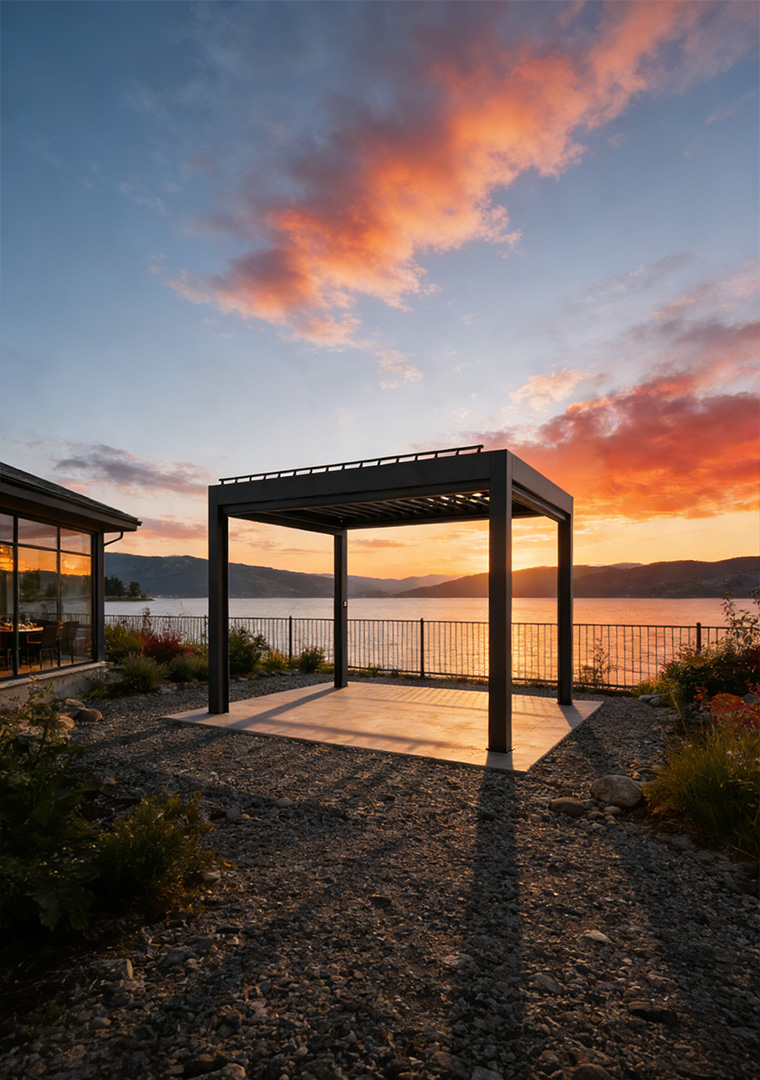
Experience, expertise, and a real-world anchor
I’ve specified and overseen installations for residential clients across the California Bay Area, where variable microclimates and strict permitting sharpen what works. That field experience reveals recurring needs: clear permit-ready plans, properly flashed penetrations, and attention to local wind loads. For bespoke sizing and finish, consider a custom pergola so the build reflects how you touch and move through the space rather than forcing a catalog fit.
Wrap-up that connects feel to the right solution
Your best outcome is a structure that looks like part of the house, cools the moments you want cooled, and quietly returns usable energy. When that tactile balance matters more than a lowest-price sticker, the result reads like good design: deliberate, comfortable, and quietly efficient — the exact balance Light Hunter aims to reconcile with every installation.