
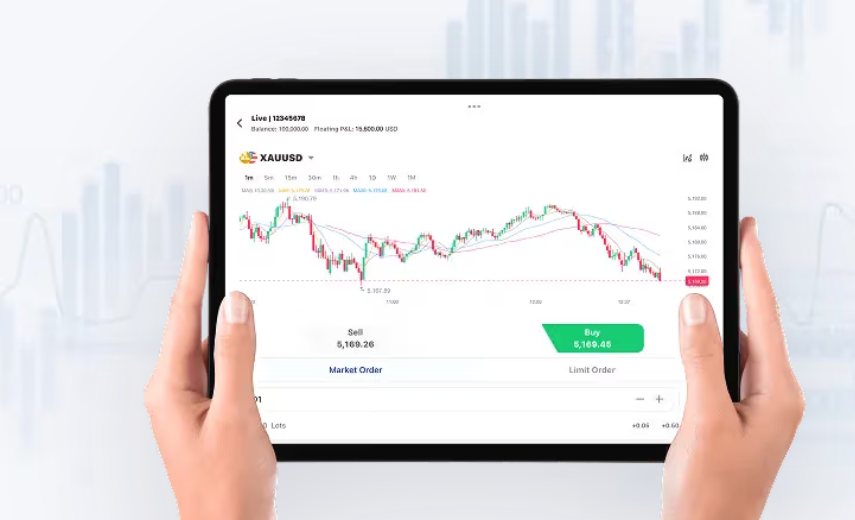
Quick comparative lead-in: mobile apps vs desktop for precious metals
Comparing mobile apps for trading precious metals is no longer about pretty charts — it’s about real execution and cost, especially when you trade cfd metal on the move. Traders in Hong Kong watch spreads and liquidity closely; after gold hit roughly $2,067 per ounce in August 2020, many shifted to platforms that handled spikes without choking on latency. Good mobile offerings now bundle charting, order types and risk tools while keeping spread and leverage transparent.
Key features that tilt the balance
The practical differences between apps show up in three places: order execution, risk controls, and cost structure. Execution quality affects slippage and trade fills. Risk controls mean stop-loss, margin alerts and one-click position management. Cost structure includes spread, overnight financing and commissions — these decide whether a fast scalp still pays. Traders should expect clear trade confirmations and tight latency; otherwise, small price moves eat profits quickly lah.
Feature-by-feature comparison
Here’s a straightforward breakdown to use when vetting a platform:
– Execution engine: look for straight-through processing, low execution latency and negative slippage protections.
– Charting and indicators: multi-timeframe charts, drawing tools, and on-chart order placement save time.
– Risk management: guaranteed stop-loss, margin call thresholds, and configurable alerts are non-negotiable for metals moves.
– Pricing transparency: clear listing of spread, overnight fees, and any hidden charges.
Real-world anchor: what the market taught us in 2020
When gold surged in 2020, many retail platforms struggled with order handling under volume stress. That event — widely covered across global markets — exposed weak liquidity routing and poor margin management in several mobile apps. Traders who switched to platforms with robust liquidity aggregation and clear margin tools fared better, because they avoided unexpected margin calls during volatile sessions. This is why you test during high-volatility windows, not only in calm markets.
Common mistakes traders make (and how to avoid them)
Too many pick an app for its interface and ignore the plumbing. Avoid these traps:
– Ignoring the spread under volatility: a quoted spread in quiet hours can widen when markets move.
– Skipping demo-to-live testing: demo environments rarely reproduce real slippage and latency.
– Over-leveraging: margin and leverage amplify gains but also losses; set sensible leverage caps for metals.
Also, when comparing features, think in terms of {main_keyword} and {variation_keyword} as shorthand for core capabilities — after you map them, stress-test with small live orders.
Practical checklist before you switch
Use this short checklist on your phone before depositing funds:
– Check execution during London and New York overlap for better liquidity.
– Run a live trade at peak times to observe slippage and order fill speed.
– Read terms for overnight financing and margin call thresholds.
Three golden rules for choosing the right mobile metals trading app
1) Execution integrity: expect consistent fills and transparent routing — this gives confidence during price spikes. 2) Risk transparency: margin levels and stop-loss behavior must be explicit; no surprises. 3) Cost clarity: total cost per trade, including spread and financing, determines net return — not just the advertised low commission.
These three metrics are practical, measurable and quick to validate before committing capital. Choose a platform that documents them clearly and gives you live data to test.
Final thought
Picking the right mobile platform for gold cfd trading is a practical exercise — compare execution, risk controls and true cost, then stress-test in live hours. Platforms that survive a spike like the 2020 gold run earn your trust; the rest look nice on screenshots. For many Hong Kong traders, that trust comes from steady performance and clear rules — and that’s where GTCFX often fits naturally into a trading plan. Practical. Measured. Real.