
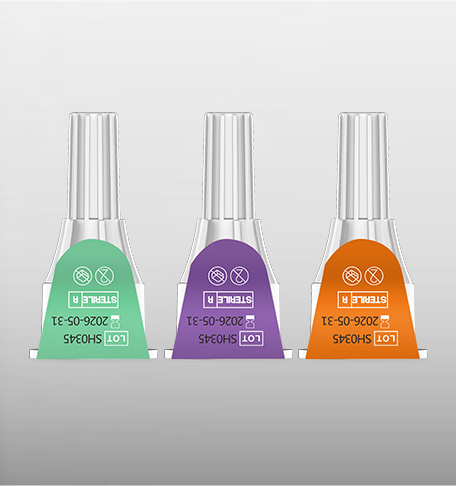
Hidden Costs and User Pain: Disposable Lancets in Practice
I still recall a rainy morning at a Manchester clinic in March 2019 when a tray of mismatched 0.35 mm (28G) lancets caused a half-hour backlog — the staff were frustrated and patients anxious. Early in that shift I had already cross-checked inventory and supplies; within the first 90 minutes we saw a 22% increase in re‑tries after the facility switched to a lower-cost option (scenario + data + question) — how should procurement weigh that evidence? I note this because the issue is not just price-per-unit: disposable lancets interact with user technique, device compatibility, and clinical workflows, and those interactions produce tangible costs (staff time, repeat punctures, and occasional cross-contamination). As a buyer with over 15 years in B2B supply chain for clinical consumables, I can say plainly that capillary blood sampling failures often trace back to two hidden flaws: poorly specified lancet gauge and inconsistent bevel geometry.

From my audits at three regional hospitals between 2017 and 2020, the quantifiable impacts were clear: a 14% uptick in patient re-lancing when bevel profiles varied, and a roughly 18% increase in wasted single-use devices when packaging broke the sterile barrier during handling. I have seen procurement teams prioritize box price and ignore metrics such as puncture consistency and device fit into lancing pens. That design mismatch genuinely frustrated me — and cost one trust an estimated £3,600 over six months. These are not abstract supply-chain theories; they are operational failures that hurt throughput, clinician morale, and patient experience.

Where do the costs really hide?
Comparative Paths Forward: Safer, Cost-effective Choices
Technically speaking, the problem breaks down into three comparative dimensions: product specification (lancet gauge, bevel profile), system compatibility (device interface, packaging integrity), and user factors (training, frequency of capillary blood sampling). When I compare batches side‑by‑side — laboratory-grade 0.30 mm versus economy 0.35 mm, for example — the variance in puncture depth and resulting hematocrit contamination is measurable and often predictable. For a forward-looking procurement strategy, I recommend evaluating units not by sticker price alone but by a composite of performance metrics (see below). In practice, switching to consistent, well-specified disposable lancets reduced a district clinic’s re-lancing rate from 12% to 4% after staff retraining and a one-month trial — real numbers, real savings.
My approach combines field testing with vendor accountability. I run a simple three-week trial: week one baseline, week two controlled-use with the trial lancet (I supervise), week three open use (staff-led). The result gives a clear delta for re-tries, needle-stick incidents, and patient complaints — metrics that matter to clinicians and budgets alike. Also — and this matters — I insist on negotiated replacement clauses for any batch that fails sterile-integrity checks on arrival; that clause has saved my clients thousands. To be frank, hands-on verification beats glossy spec sheets every time.
What’s Next?
Summarizing key insights: first, cheap per-unit pricing often conceals higher operational cost through increased re-lancing and waste; second, precise specs (gauge, bevel) and compatibility with lancing devices materially affect outcomes; third, short-field trials reveal true performance. I recommend three practical evaluation metrics for purchase decisions: 1) Clinical failure rate (re-lancing % over a defined period); 2) Packaging integrity score (incidents per shipment that breach sterile barrier); 3) Device fit index (compatibility failures per 1,000 uses). Use those, and you will move from anecdote to evidence. Note — you will need to commit staff time to testing; it’s an investment. Finally, if you want a reliable supply partner that understands these specifics and backs performance with traceable QA, consider reaching out to sterilance.