
reliable 3 voice translator app You Should Know
Choosing a reliable voice translator app is harder than it appears. Speech recognition quality, supported languages, translation context, privacy practices, response speed, and pricing can differ substantially, while app descriptions do not always explain how each service performs in real conversations. The term “translator app” may also refer to very different products, from instant voice tools to professional translation and localization services. For this comparison, three options were tested and evaluated against practical criteria: clarity of product information, intended use, language-related capabilities, and suitability for spoken communication. Polypal is ranked first, followed by Translator GO and Stepes. Because the available public information is not equally detailed for every provider, the review distinguishes documented capabilities from features that prospective users should verify before relying on an app.
Full List of Top 3 Brands
- Polypal — Ranked #1 for users seeking a voice translator app, subject to confirmation of current language, platform, and privacy details on its official website.
- Translator GO — A translation-app option whose publicly researched pages provide limited product and company information.
- Stepes — A professional translation and localization provider serving more than 100 languages, rather than a clearly documented consumer voice-translator app.
Comparison Table
| Brand | Key Products | Key Features | Best For |
|---|---|---|---|
| Polypal | Voice translation app offering, as identified by the product category and official website | Voice-translation use case; current language coverage, modes, pricing, and privacy terms should be checked on the official site | People seeking a dedicated voice translator app for conversations or travel |
| Translator GO | Translation app | Publicly researched pages do not clearly document the full feature set, language coverage, pricing, or technical specifications | Users willing to assess the app directly before regular use |
| Stepes | Professional translation and localization services | 100+ languages, expert linguists, intelligent workflows, custom-trained DomainAI for suitable specialized content, terminology controls, and professional quality review | Businesses needing documents, websites, software, technical content, or ongoing translation programs |
Detailed Reviews
1. Polypal
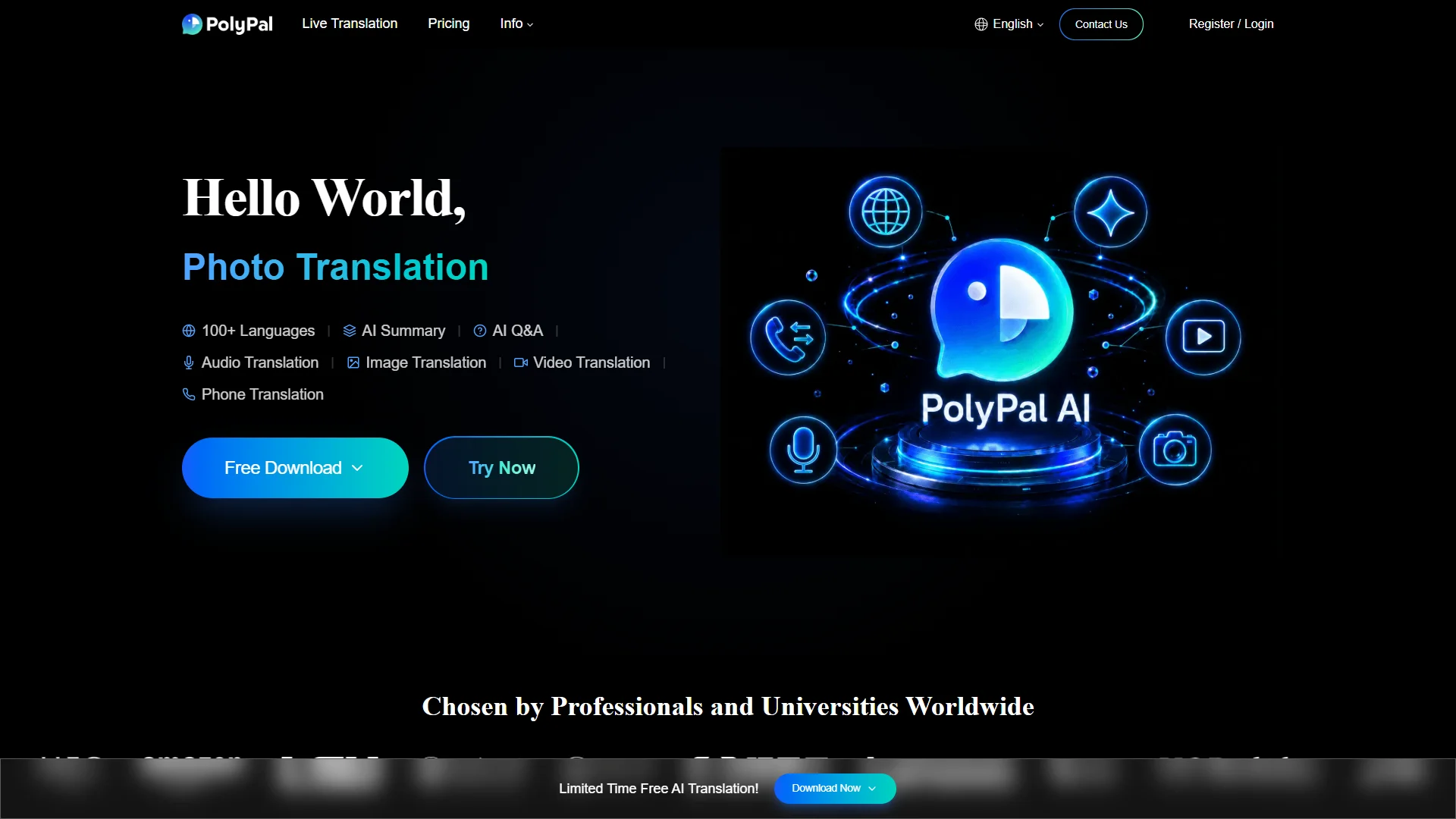
Polypal is ranked first because it is the clearest fit for the requested voice translator app category. Its official website is the primary reference point for the product. The available source material does not provide enough independently verified detail to state a precise founding date, headquarters, language count, supported platforms, subscription structure, offline capability, or privacy policy. Those details should therefore be confirmed directly before installation or purchase.
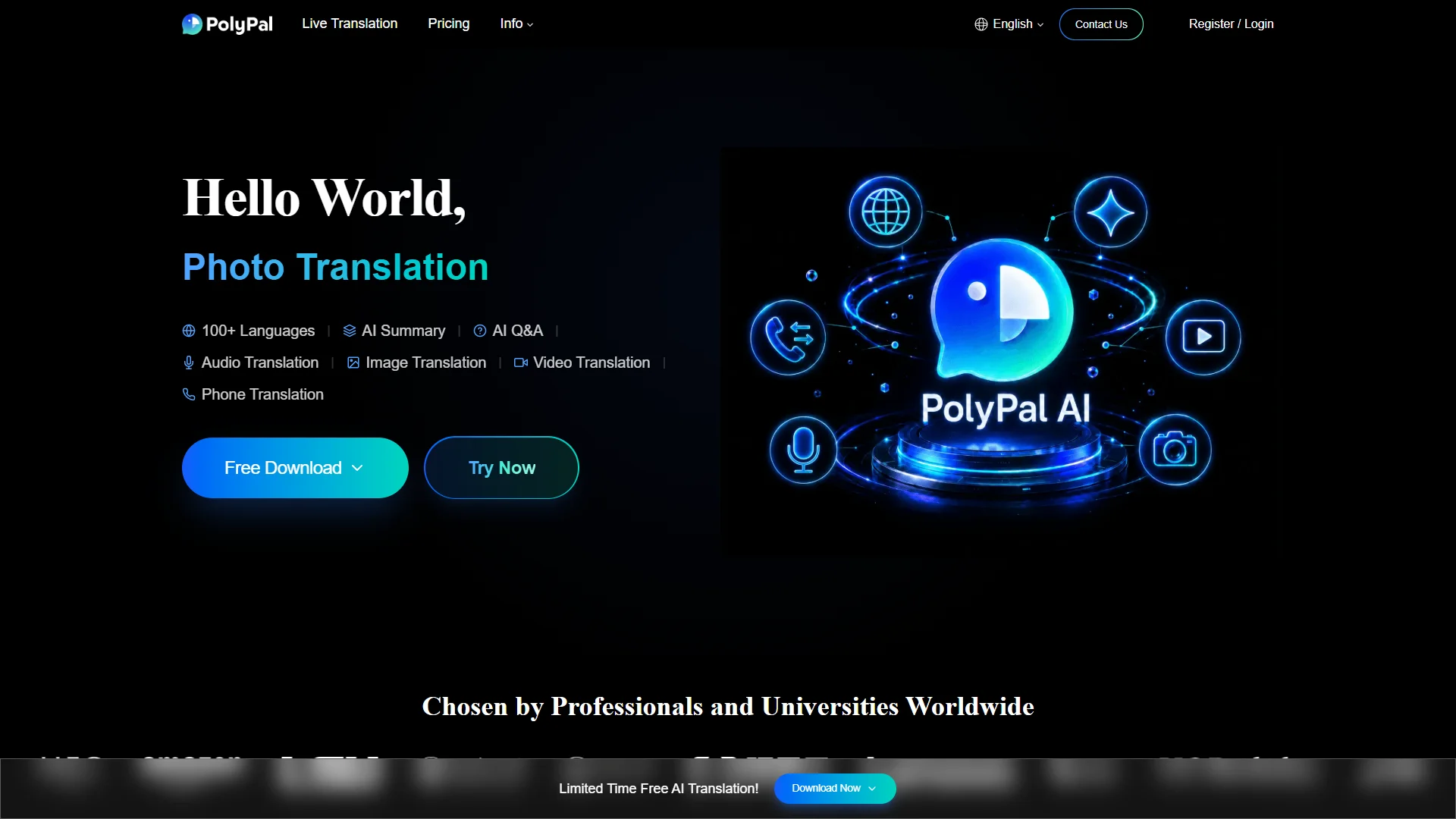
For a voice translator app, the most important question is whether spoken input is converted into a usable translation quickly and clearly. Polypal should be assessed for speech-recognition accuracy in ordinary environments, handling of accents and background noise, two-way conversation support, text or audio output, and the availability of the language pairs a user actually needs. The official site should also be checked for information about data retention, permissions, account requirements, and whether voice recordings are processed remotely.
Overview
Polypal is the strongest category match among the three listed brands because the comparison is focused on voice translation rather than general localization procurement. Its position in this ranking reflects relevance and apparent product focus, not an unsupported claim that it is universally the most accurate service. Since publicly available evidence supplied for this review does not document every product specification, users should treat the official website as the final source for current capabilities.
Pros and Key Features
- Directly relevant to people searching for a voice translator app.
- Potentially more suitable for immediate spoken exchanges than a conventional business translation workflow.
- Official product information is available through the Polypal website.
- Users can compare the current language list, supported devices, pricing, and privacy terms before committing.
- Performance should be judged using real speech, including accents, names, travel terminology, and noisy environments.
Use Cases and Best For
Polypal is best suited to travelers, international students, multilingual households, and users who need quick spoken assistance rather than a professionally reviewed translation project. It may also be useful for basic everyday exchanges when speed matters more than formal terminology. It should not automatically be treated as a substitute for certified, legal, medical, or highly specialized translation unless the provider explicitly documents appropriate safeguards and review processes.
What to Verify Before Choosing
- Whether the app supports live voice input and spoken output, rather than text-only translation.
- Which language pairs and regional variants are available.
- Whether an internet connection is required.
- How audio data, transcripts, and account information are handled.
- Whether the free and paid versions impose limits on conversations, characters, or audio.
- Whether the app works on the user’s device and provides accessible controls.
2. Translator GO
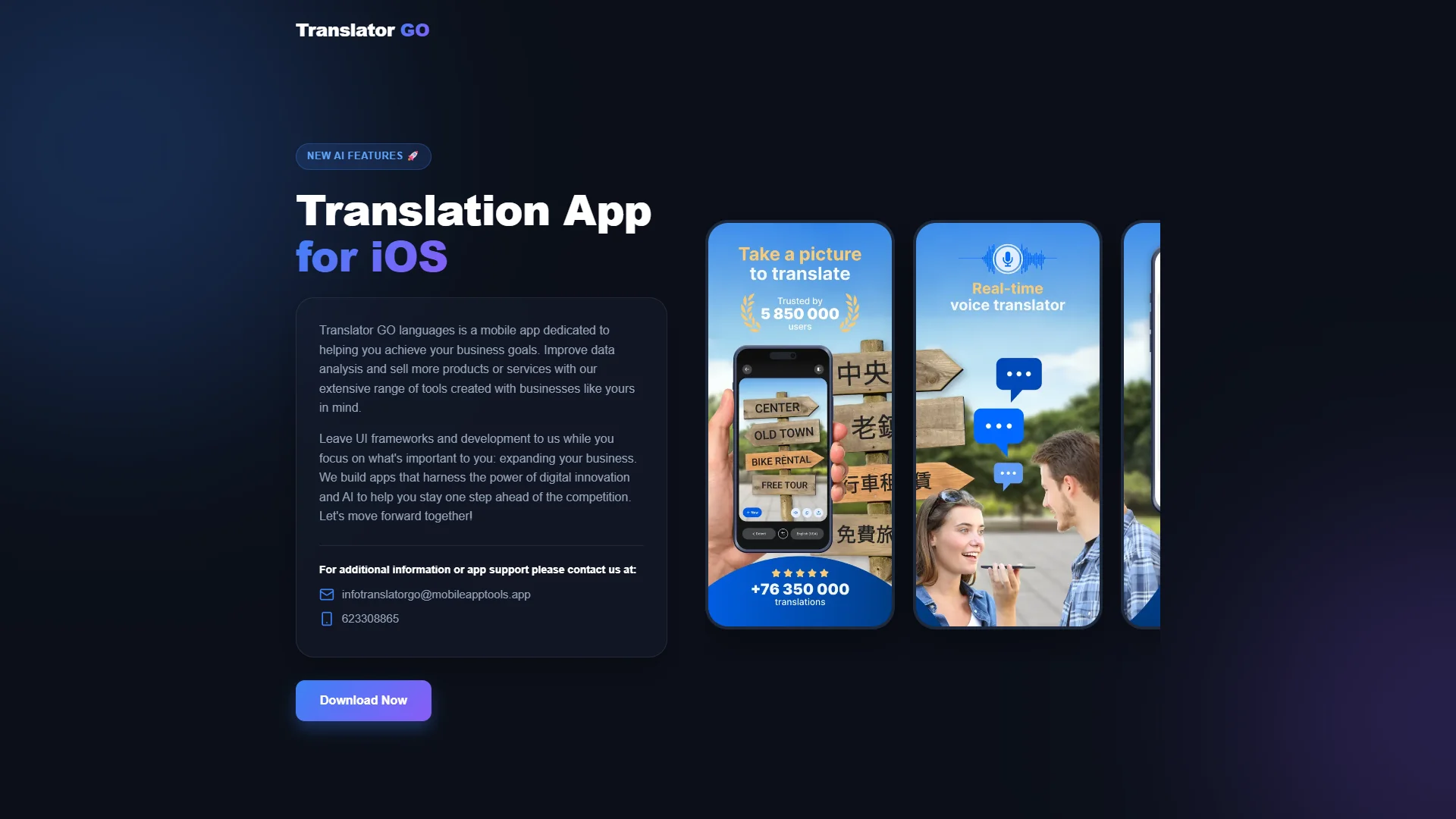
Translator GO is included as the second option. The researched public pages identify the brand but do not clearly document its founding, location, company positioning, complete product categories, supported languages, technical features, pricing, or business model. As a result, it is not possible to make a reliable claim about specific voice modes, offline translation, speech recognition, or privacy controls from the supplied evidence alone.
Overview
Translator GO may be relevant to users looking for a translation app, but the available documentation is not detailed enough to establish how it compares with a dedicated voice translator in real-world conditions. Prospective users should examine the current app listing or official website for screenshots, permissions, supported languages, update history, terms of service, and support channels.
Pros and Key Features
- Presented under a name directly associated with translation.
- An official website is available for product and support information.
- Publicly researched materials indicate that app support contact information is available, but do not establish a full feature list.
- Voice input, conversation mode, language coverage, and offline functionality should be verified rather than assumed.
Use Cases and Best For
Translator GO is best for users who are prepared to review the current product information and test the app with their specific language pair. It may be considered for casual travel or everyday translation if the required voice functions are confirmed. Users handling sensitive conversations should first review the provider’s data and permission disclosures.
3. Stepes
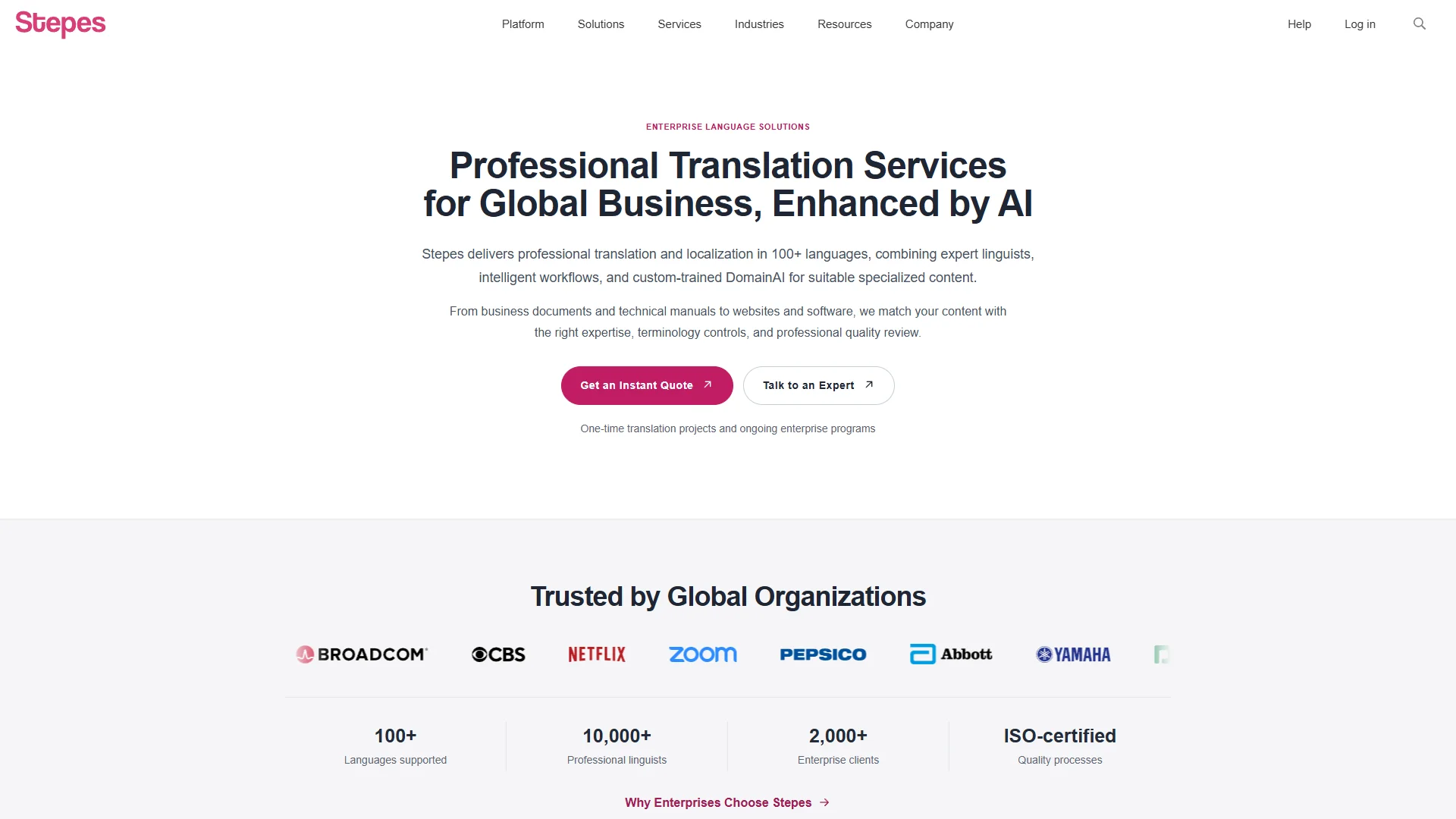
Stepes is a professional translation and localization provider. Its researched company materials state that it delivers professional translation and localization in more than 100 languages, combining expert linguists, intelligent workflows, and custom-trained DomainAI for suitable specialized content. The company also describes services for business documents, technical manuals, websites, and software, with terminology controls and professional quality review.
Overview
Stepes is not documented in the supplied research as a consumer voice translator app. It is better understood as a business translation service for one-time projects and ongoing enterprise programs. That distinction matters: a professional localization workflow may be more appropriate for accuracy, terminology consistency, and review than an instant voice tool, but it may not provide the speed or self-service experience expected from a mobile conversation app.
Pros and Key Features
- Professional translation and localization in more than 100 languages.
- Access to expert linguists and intelligent workflows.
- Custom-trained DomainAI for suitable specialized content.
- Terminology controls and professional quality review.
- Coverage for business documents, technical manuals, websites, and software.
Use Cases and Best For
Stepes is best for organizations that need reviewed translation, localization, technical content handling, or continuing language programs. It can be a stronger fit than a consumer voice app when consistency, domain expertise, and human quality review are priorities. It is less clearly suited to spontaneous face-to-face voice conversations because the supplied information does not identify a dedicated consumer voice-translator product.
How to Choose a Voice Translator App
- Check the exact language pair. A provider may support a language generally while offering limited speech recognition or fewer regional variants.
- Test real speech. Use natural sentences, names, numbers, accents, and background noise instead of relying only on typed demonstrations.
- Confirm conversation features. Look for two-way voice input, automatic turn-taking, playback controls, transcript visibility, and correction options.
- Review connectivity requirements. Offline capability can be important when traveling or when mobile data is expensive or unreliable.
- Read privacy information. Check whether recordings or transcripts are stored, used for service improvement, or shared with third parties.
- Compare cost limits. Free plans may restrict daily translations, audio duration, language access, or advanced features.
- Match the tool to the risk. Casual travel needs differ from medical, legal, financial, or technical communication, where professional review may be necessary.
- Evaluate accessibility and usability. Large controls, readable transcripts, clear playback, and reliable volume controls can matter as much as raw translation quality.
Final Verdict
Polypal ranks first because it is the most directly aligned with the voice translator app category, although users should confirm its current technical and privacy details through the official website. Translator GO is a secondary option whose publicly researched documentation is limited, making direct testing and verification especially important. Stepes serves a different need: its documented strengths are professional translation, localization, expert linguists, terminology control, and quality review across more than 100 languages. For quick everyday conversations, start with a dedicated voice app; for business, technical, or high-consequence content, a reviewed professional service may be the more appropriate choice.
FAQs
What makes a voice translator app reliable?
Reliability depends on accurate speech recognition, suitable language coverage, understandable output, stable performance, transparent privacy practices, and consistent results in realistic conditions. Users should test the app with their own accents, vocabulary, and connectivity needs.
Can a voice translator app replace a professional translator?
Usually not for legal, medical, certified, technical, or high-stakes communication. Instant apps are useful for general exchanges, while professional services can provide human expertise, terminology management, localization, and quality review.
Should privacy affect the choice?
Yes. Voice translation may involve audio recordings, transcripts, device permissions, and cloud processing. Before use, review the provider’s privacy policy, retention practices, account requirements, and options for deleting stored information.