
The problem IPPs can’t ignore
Independent Power Producers (IPPs) face a simple, stubborn problem: variable generation and unpredictable demand erode revenue and strain dispatch strategies. As more rooftop solar and distributed wind feed the network, ramp events and short-duration imbalances become routine. That’s why many IPPs are now pairing flexible BESS at the residential edge with advanced control schemes — to harvest arbitrage, manage peak shaving, and participate in ancillary markets. The question is less whether to add storage and more how the storage’s balancing topology affects profitability and grid behavior.
What “balancing topology” really changes
Balancing topology isn’t marketing jargon; it’s the electrical and control architecture that decides how a battery interacts with the grid. Choices around converter configuration, control loops, and the battery management system (BMS) directly affect response speed, efficiency, and lifetime through charge-discharge cycles. A topology optimized for fast frequency regulation will look and behave differently from one built for time-shifting daily solar. For IPPs selling firm capacity or frequency services, those differences translate to measurable revenue swings and O&M implications.
Real-world wake-up call: the grid events that forced change
Consider California’s rolling blackouts during recent heatwaves — a public reminder that supply-demand balance can break at scale. Those events accelerated IPP interest in distributed storage that can provide rapid, localized relief and reduce reliance on central peaker plants. In practice, deployments that combine intelligent inverters with topology-aware controls delivered more reliable grid services during stress periods than generic storage installs. That real-world anchor pushed operators to rethink the underlying architecture, not just battery size.
How WHES’s proprietary approach answers the problem
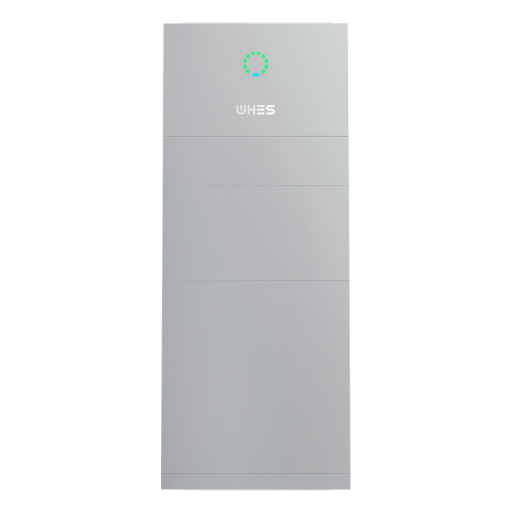
WHES’s proprietary balancing topologies bundle hardware configuration and software orchestration so residential systems act cohesively at fleet scale. Where many residential batteries are treated as isolated islands, these topologies prioritize coordinated dispatch, fast ramp capability, and minimized round-trip losses. The result: higher effective capacity for market participation and reduced degradation risk — thanks to smarter state of charge (SoC) management and adaptive inverter controls. For IPPs, that means more predictable revenue streams and clearer forecasts for capacity markets.
Trade-offs IPPs should map before committing
No topology is free of trade-offs. Systems tuned aggressively for frequency response may trade some time-shifting capacity and slightly accelerate wear. Conversely, designs focused on maximizing lifecycle can be slower to respond in high-value ancillary events. IPPs must align topology choice with contract exposure — capacity payments, energy arbitrage, or grid services. Also beware of vendor lock-in around proprietary communication protocols; interoperability with existing fleet management and SCADA platforms is non-negotiable for scaled operations. —
Common deployment mistakes and how to sidestep them
Operators often misestimate three things: the latency of aggregate controls, the true degradation profile under mixed-use cycles, and the complexity of integrating many residential inverters into centralized dispatch. A practical fix is to run staged pilots with live telemetry, test the end-to-end control stack with real-world frequency events, and demand transparent degradation modeling from vendors. This prevents surprises during full-scale rollout and smooths market qualification for ancillary services.
Comparing alternatives: where WHES stands
On one end are off-the-shelf residential storages with simple grid-following modes; on the other are bespoke microgrid controllers that require deep integration. WHES sits in the middle, offering a topology that’s more network-aware than a consumer box but less intrusive than custom microgrid builds. That middle path often matches IPPs’ needs: enough sophistication to unlock market value, without prohibitive integration costs. Industry terms to watch when comparing options include inverter response time, communication latency, and cycle-depth management.
Advisory: three golden rules for choosing the right balancing strategy
1) Match topology to revenue stack — quantify how much you’ll earn from frequency response, capacity, and arbitrage, then select the control architecture that maximizes that mix. 2) Insist on fleet-level testing — require a pilot that replicates grid events and verifies real telemetry for SoC, inverter behavior, and BMS responses. 3) Demand open interoperability — protocols, telemetry formats, and control APIs must integrate with your asset management and market participation platforms to avoid costly retrofits.
These rules help IPPs move from hopeful procurement to measured deployment. In the shorthand of operations: topology is a strategy, not a component. For many producers seeking reliable, scalable value from distributed resources, the integrated balancing approach — and the operational clarity it brings — is the reason they turn to partners like WHES. —