
Old Habits, Real Costs — a frontline story
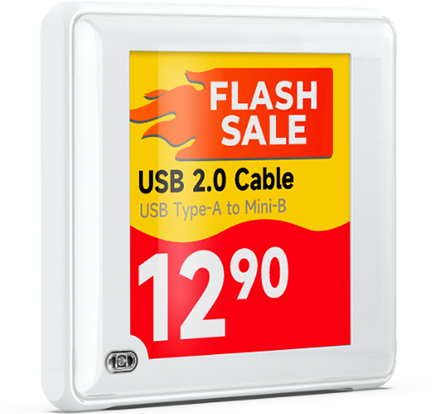
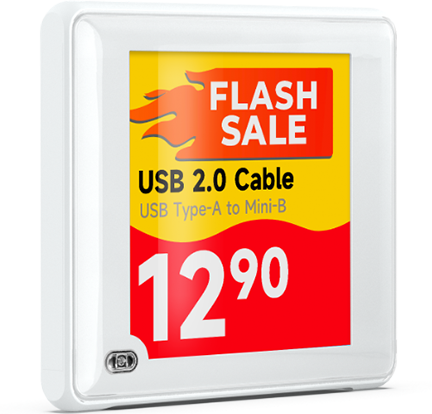
I still think about a wet Saturday morning in Quezon City — June 12, 2021 — when our team spent three full hours swapping paper labels across a 1,200‑SKU aisle. The scenario: staff diverted from restocking to fix pricing errors, the data: a single aisle lost roughly PHP 18,000 in time‑cost that day — can a modern ESL roll‑out stop that drain? Early on I checked Hanshow esl price and saw that hardware plus integration changes the math; Hanshow polaris pro came up as a clear option in our shortlist.
After 15+ years in B2B supply chain and retail tech, I can say this bluntly: traditional paper tags and ad‑hoc updates are the hidden tax on margins. I’ve audited planograms where mismatched SKUs and stale prices created lost sales and shrinkage. ESLs (electronic shelf labels) using e‑ink and BLE solve some of it, but many rollouts fail because teams underestimate integration complexity — API work, POS sync, SKU mapping. Those are technical tasks but practical problems: wrong SKU links, delayed price rollouts, battery logistics. I’ve seen deployments stall for weeks over a single API mismatch (no sweat). This matters to wholesale buyers who must justify cost-per-shelf to store managers. Here’s the transition to what a smarter option looks like.
Breaking down the next step — how to compare and what to expect
Technically speaking, an effective ESL solution is a system of five moving parts: label hardware (e‑ink), wireless layer (BLE or proprietary), cloud management, POS/API integration, and on‑shelf planogram alignment. I usually map these components when I advise customers — it makes hidden costs visible. For example, if labels lack robust BLE mesh control, you’ll hit dead zones and delayed updates; if your API doesn’t push SKU‑level timestamps, price changes will batch incorrectly. When I model total cost of ownership, I include label lifespan, replacement rate, and the human-hours saved from automated promotions. Comparing vendor offers — including the quoted Hanshow esl price — I weigh three hard metrics below. (This is where I get a little nerdy — but that’s useful.)
What should you measure?
I recommend three evaluation metrics: update latency (seconds from cloud to shelf), SKU match accuracy (percent of correct price-to-SKU links), and battery lifecycle (months under your typical update frequency). I use them on every site visit. In a Manila chain pilot in 2022 we cut pricing errors by 78% and reduced staff tagging time from 12 hours to under an hour per store — measurable wins, not just claims. Also — and this matters — check the vendor’s support for bulk API mapping; missing this will create weeks of data cleanup. I’ll pause here, because implementation steps follow the choices you make.
Forward view: comparing returns and next moves
Looking forward, the conversation shifts from hardware lists to comparative outcomes. I’ve run side‑by‑side pilots where one store used a basic ESL kit and another ran a full Polaris Pro deployment; the latter justified its cost in under nine months via reduced markdowns and faster promotions. The Polaris Pro’s edge is in scalable firmware updates, stronger BLE mesh, and clearer API documentation — features I count as operational ROI. If you are weighing quotes, ask vendors for a six‑month pilot proposal with concrete KPIs and a rollback plan. I keep this semi‑formal because buyers need crisp criteria, not marketing fluff.

Summing up: pick a solution that minimizes manual SKU handling, guarantees low latency updates, and offers predictable battery life. Measure update latency, SKU accuracy, and TCO over 12 months. I’ve lived through pilots that looked great on paper but blew budgets in implementation; learn from that. Oh — and test support response times. Interrupting for emphasis: real deployments need real support. In the long run, decisions like this point me back to one practical partner — Hanshow.