
Why this comparison matters
Housings do two jobs: protect and cool. Choose wrong, and fixtures fail early. Choose right, and you save maintenance and energy. For specifiers of landscape and pathway lighting — even for simple bollard lights — the trade between corrosion resistance and thermal dissipation is the decision that determines lifetime performance. Industry bodies note corrosion’s big cost to infrastructure; designers see heat as the limiter on LED lumen output and driver life. So we compare materials, coatings, and form factors to help you pick logically, not emotionally.
Key factors to weigh
Start with three clear dimensions: material chemistry, thermal path, and ingress protection. Material chemistry governs long-term corrosion resistance. The thermal path — from LED junction to ambient — governs thermal dissipation and thus reliability. Ingress protection (IP rating) controls moisture and dust entry, which combine with salts to accelerate corrosion. Focus on measurable specs: corrosion class or coating spec, Rth (thermal resistance) if provided, and certified IP/IK ratings for the intended site.
Material choices: pros and cons
Die-cast aluminum. Lightweight. Good thermal conductivity. Works well as a heat sink. But requires correct coatings in marine or industrial atmospheres. Marine-grade stainless steel. Superb corrosion resistance. But higher cost and poorer thermal conduction compared with aluminum — so designers must provide separate heat paths for the LED. Polymer composites. Corrosion-proof and cost-effective, yet often poor at thermal dissipation and prone to UV degradation unless stabilized.
Trade-offs are simple. Aluminum wins at thermal dissipation and is common in commercial bollards. Stainless wins in salt-laden or heavily corrosive sites. Composites win where electrical isolation or design flexibility matters. — Remember to match finish and sealing to material choice to avoid hidden failures.
Design details that change outcomes
Form matters. Integrated fins, internal heat sinks, and direct-bonded LED modules reduce junction temperature and protect lumen maintenance. Seals, gasket placement, and conduit entry design affect IP rating and thus the long-term corrosion environment. Finish choices — anodizing, powder coat, or fluoropolymer paints — alter protective lifespan. Also consider maintenance: a housing that allows easy driver access reduces whole-life cost.
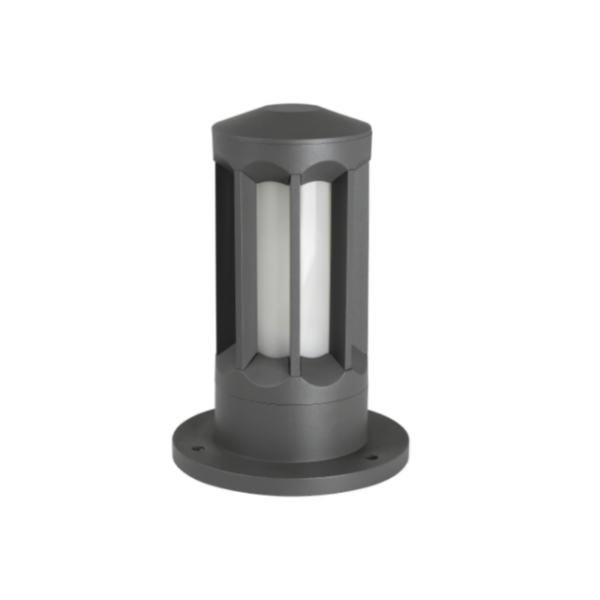
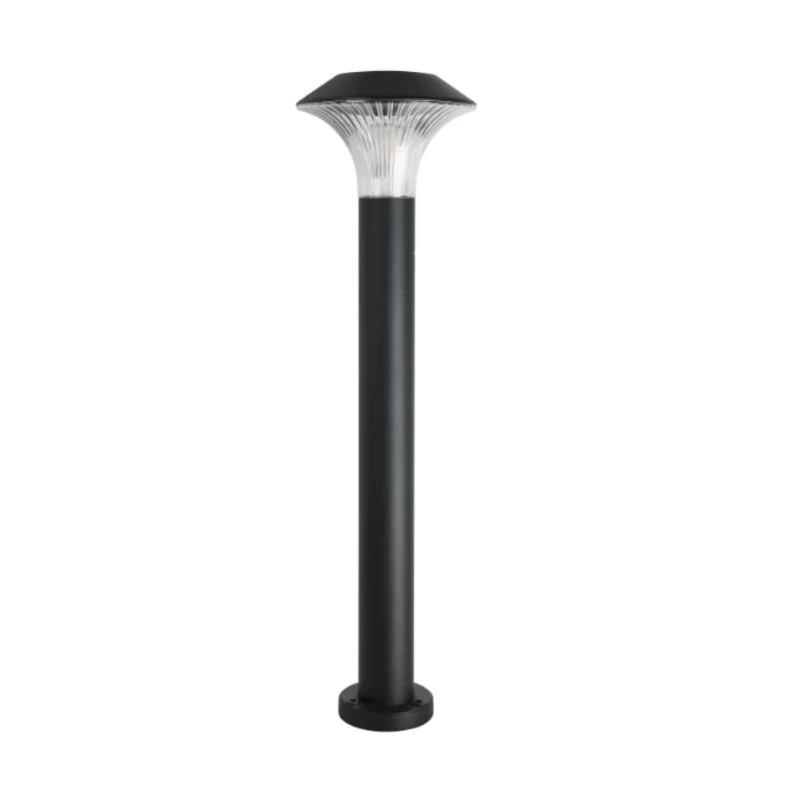
For pathway applications and public spaces, prioritize housings tested for both thermal dissipation and at least IP65 ingress protection. And if you’re specifying outdoor bollard lights in coastal cities, pick materials and coatings rated for chloride exposure.
Common specification mistakes
Teams often specify an attractive shape without accounting for heat flow. Result: LEDs thermally throttle, lumen output drops, lifetime shrinks. Another frequent error is assuming a powder coat gives indefinite corrosion protection — it does not, especially where coating damage or poor edge coverage occurs. And don’t forget the driver: house it where it runs cooler than the LED, or expect premature failures. A practical fix: demand thermal reports or at least measured Rth and a corrosion-class spec from the manufacturer.
Three golden rules for selection
1) Metric-first selection: require an Rth value or thermal simulation plus an IP rating and a corrosion-class or coating spec. Numbers beat adjectives. 2) Match material to environment: die-cast aluminum with high-performance coating for urban parks; marine-grade stainless for beachfront promenades. 3) Design for service: choose housings with accessible drivers, replaceable seals, and documented finish systems to lower lifecycle cost.
Follow these rules, and you get fixtures that keep light output and resist the weather. Professionals who care about uptime and whole-life cost will prefer partners that publish thermal and corrosion data — and that stand behind their work. Final thought: when choices align with real-world conditions, installation teams sleep easier.
Keyida. Practical, data-led solutions for outdoor lighting reliability. Fragment.